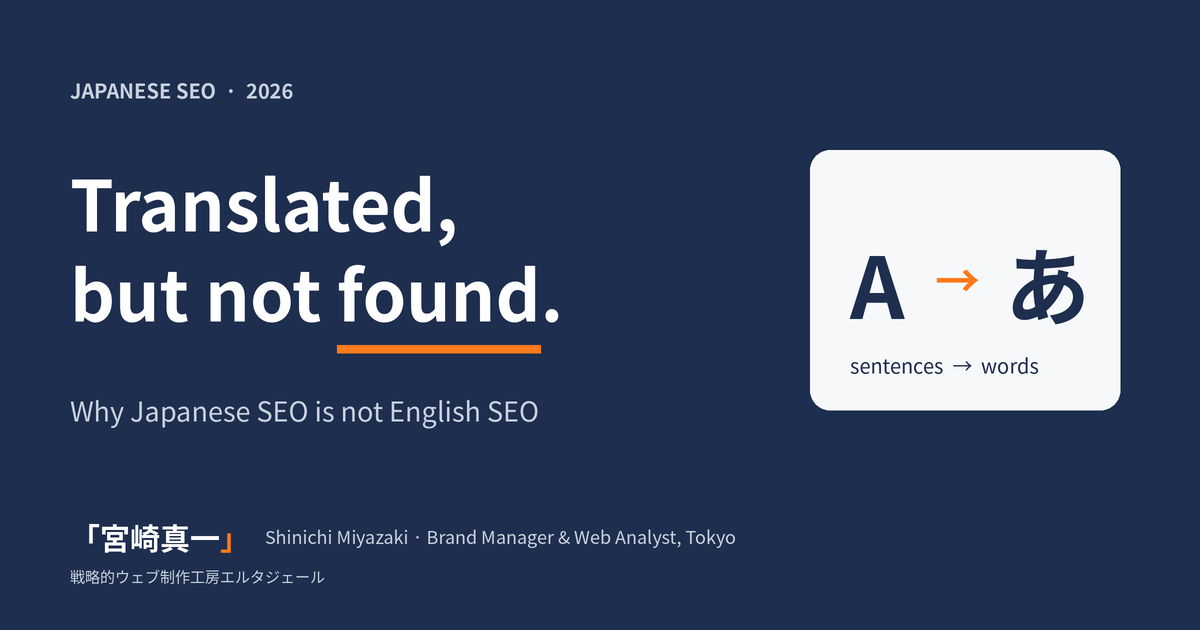
You translate sentences. You have to choose words.
I wrote this from my own work and data. I used AI to help draft the English; every example and judgment is mine, and I checked every line.
Many companies preparing for Japan start the same way. They take their English website, have it translated well, and publish a Japanese version. Then they wait for Japanese buyers to find it. Often, nobody comes.
The translation is usually not the problem. The problem is that nobody chose the words. A good translator turns your sentences into natural Japanese. But Japanese buyers don’t search for your sentences. They search with their own words, and those are often words no translator would choose.
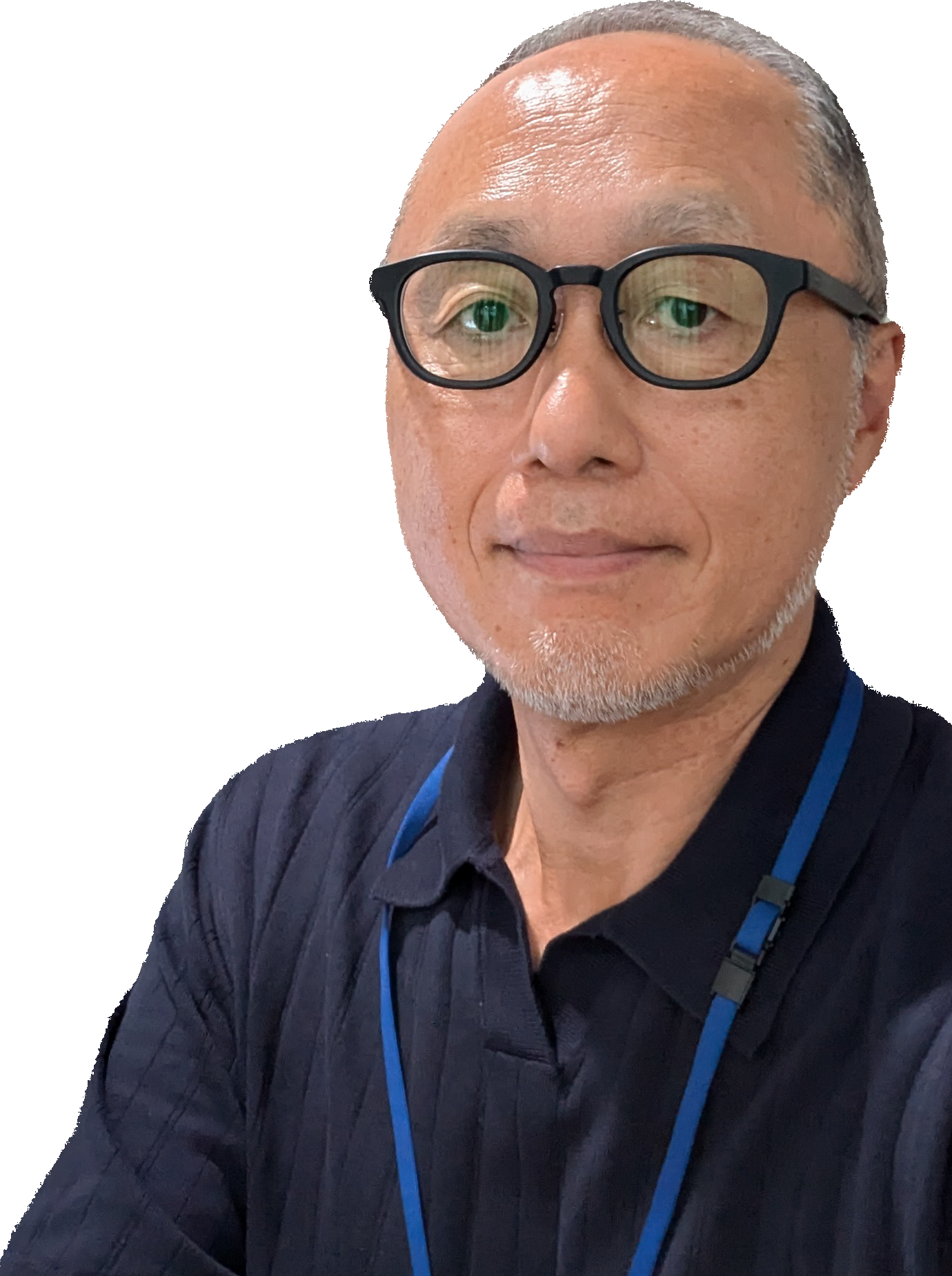
I’m Shinichi Miyazaki, a brand manager and web analyst in Tokyo. I have built and supported websites for more than 80 small businesses in Japan. This is what I have learned about the gap between being translated and being found.
A tutoring school that used the “right” keywords
In 2025, I worked with a tutoring school (juku) in Japan. Japanese students are measured by hensachi, a standardized score used to predict which schools they can get into. Most tutoring schools sell one thing: a higher hensachi.
This school was different. It works with students who have struggled to raise their scores, and it focuses on helping them want to keep learning.
At first, we built the website around the keywords other tutoring schools use. It did not bring in the students the school was built for.
So we asked. We interviewed five mothers of current students. In these families, the mother was the one who chose the school. We asked each of them what they had typed when they were looking.
Their answers surprised us. One had searched for 偏差値 疲れた (hensachi tsukareta, “tired of hensachi”). Another had searched for つづけられる学習塾 (tsuzukerareru gakushujuku, “a tutoring school my child can stick with”). Neither phrase was on our keyword list. No translator would have produced them, because they are not translations of anything. They are what a worried parent types.
We rebuilt the pages around these words. The result showed up in the summer course. Inquiries for it rose from 26 in 2024 to 65 in 2025.
The words that bring your best customers are often not the words you use to describe yourself.
The same thing, in different words
Japanese adds a layer that English does not have. One English word often has several Japanese equivalents, and people search with each of them differently.
| English | Japanese options | What to know |
|---|---|---|
| dentist | 歯医者 / 歯科医院 / デンタルクリニック | Searches are usually 歯医者 (haisha) plus the area name |
| accountant | 税理士 / 会計事務所 | The results differ depending on which word people search with |
| accommodation | ホテル / 旅館 / 宿 | Hotel, traditional inn, or simply “a place to stay” |
| price | 料金 / 価格 / 費用 | 料金 for services, 価格 for products, 費用 for B2B costs |
| recommended | おすすめ / オススメ / お勧め | The same word written in hiragana, katakana, or kanji |
A translator will pick a correct word. Search needs the word your customers use. Those are not always the same.
How I choose the words
Before I write a single Japanese page, I work through four steps.
- Collect candidates. I start with Google’s autocomplete and “related searches” in Japanese. I also use Rakko Keywords, a Japanese keyword tool, to see the phrases and questions people attach to a topic.
- Compare how often they are searched. I check the candidates in Google Keyword Planner and see which words people actually use, and how much.
- Ask real customers, when you can. The tutoring school’s best keywords came from five interviews, not from a tool. Tools show what is common. Customers show what is true for your business.
- Check after launch. Once the pages are live, Google Search Console shows the words people really used to find you. I adjust the pages around those words.
Start with words, not sentences
Translation is the work of turning your sentences into Japanese. The decision that comes first is which words to build those sentences around. Start from the words Japanese buyers actually type, then write.
Good translation makes you understandable. Japanese search makes you findable. You need both.
If you would like to know which words your Japanese pages should be built around, I offer a free Japan-Readiness Audit. I look at your site the way a Japanese buyer would, and send you a one-page summary of what to fix first.
Request a free Japan-Readiness Audit
Shinichi Miyazaki is a brand manager and web analyst based in Tokyo, and a former editor at The Japan Times. He helps small English-speaking companies earn Japanese buyers’ trust online.